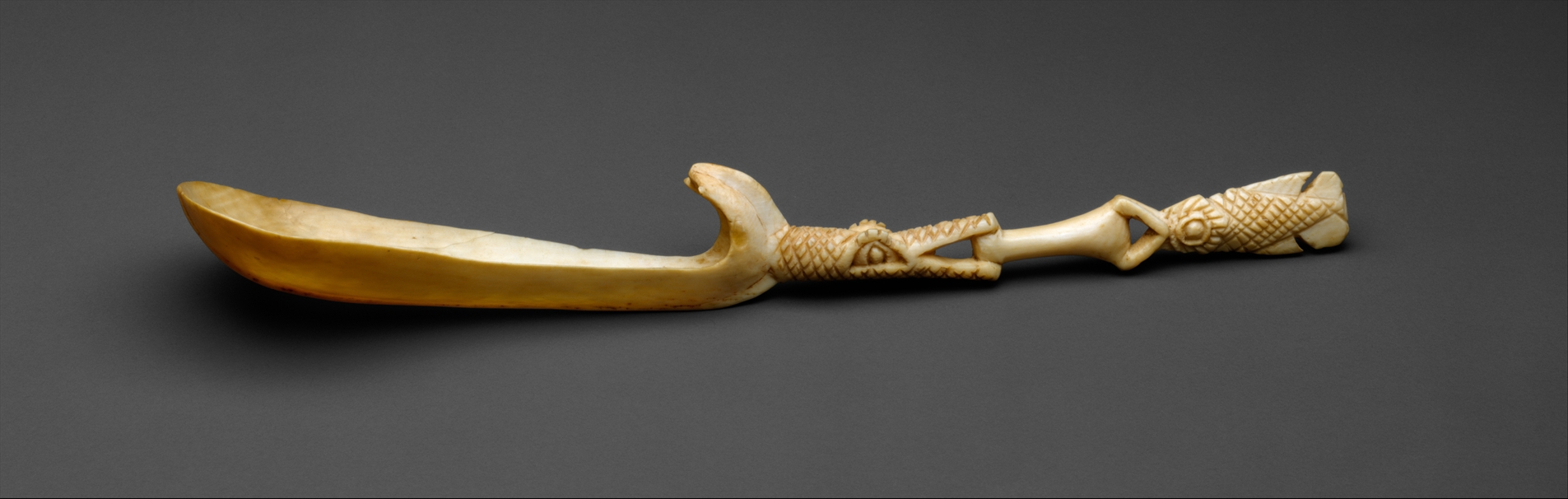
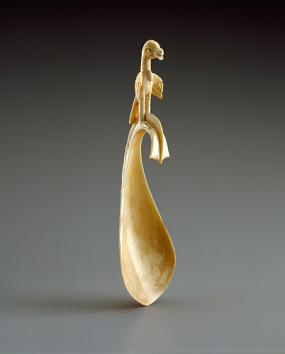
Title: Bini-Portuguese Ivory Spoons
Artist: Edo peoples
Place of Origin: Benin, Nigeria
Date: 15th-16th century
Dimensions: length 8 1/4” – 6 1/2”
Materials: elephant ivory
These ivory spoons do not look like typical European-style spoons, but they were originally made for trade with Portuguese explorers by members of the Edo people who populate parts of West Africa. They are made with traditional Benin ivory carving techniques and include symbols important to Edo culture. The fish probably represents a connection to the sea god, an important figure in mythology across West Africa who was to be feared but who also brought wealth. The bird on the other example is thought to symbolize the power of the oba, or king, as a similar bird figure has also been seen on the tops of palaces and on ceremonial gongs. Hundreds of similar spoons were made around this time to trade with Europeans, making them an early form of tourist art. This begs the question of ownership. These spoons were commissioned en masse by the Portuguese. Even though they were made with traditional techniques by artists of the Edo people, they were made for completely commercial reasons. Once in Europe, there would be little to link them to the beliefs and ideas that inspire the symbols of birds and fish. Do artists need special reasons to make their art, or are things made only to sell just as legitimate? Who is the artist if someone else had the idea for it?

 Conversation